Adel spray foam where the air leaks are hardest to reach.
Older Adel homes leak air at the rim joist, behind knee walls, and wherever an addition was joined to the original house. Those tight, awkward spots are what spray foam handles well. A plain open attic floor usually does not need it, and we will say that during the walkthrough.
Foam is an air-sealing job first.
Most people call about spray foam because a room is cold. Once we are inside, the cause usually turns out to be air leaking in somewhere, and more fluffy insulation piled beside the leak slows heat a little while the draft carries right on. Outdoor air slips in along the top of the foundation, through gaps around an old addition, and behind the short walls of an upstairs bedroom. Foam fills that gap, grabs the framing and closes it off. Sealing is the real reason to spray, and it is how we decide where foam goes.
Older homes like the ones in Adel’s established neighborhoods often carry changes from past owners. A bonus room went in over the garage. An upstairs was finished with knee walls. A family room got built onto the back. Every one of those changes left a seam, and seams are where we spend most of our foam. The spray foam insulation page explains our approach across the whole service area, and the Adel page lists everything else we do here.
The two places older Adel houses give up heat.
The rim joist above the foundation
Go down to the unfinished part of an older basement and look at the top of the foundation wall. The wood resting on it runs the full outline of the house, with only sheathing and siding between it and January. Often there is a scrap of fiberglass tucked in the pocket, and sometimes nothing at all. We spray that band so the gap between wood and concrete is sealed shut, and the floor above stops feeling like it sits over a draft.
Rim work is also one of the tidier foam jobs we do. It all happens downstairs, nothing in the living space gets touched, and if you plan to finish that basement someday, the most important air seal is already in place while the wall is still bare.
Bonus rooms and knee walls
An upstairs room with sloped ceilings has short walls along each side, and behind them sits attic space open to the cold. A room over a garage has the same weakness in its floor. Batts in those spots slump, pull away, or get pushed aside by whoever ran wiring last. Foam on the back of the knee wall, or under the bonus room floor where we can reach it, keeps that room from being the one nobody wants to use in winter.
Additions follow the same logic. Where the newer part of a house meets the older part, there is often an unsealed gap in the framing at the roofline or along the floor. When we can reach that joint from the attic or the basement, foam is the simplest way to shut it.
What we check before anyone sprays.
Trace the draft
We start in the room you complain about, then follow the air back: basement rim, the little doors in a knee wall, the spot where an addition’s roof meets the old one.
Rule out water
A damp foundation wall or a roof leak gets dealt with before foam goes anywhere near it. Spraying over wet framing only hides trouble.
Name the spots
The written scope says which areas get foam, which get blown-in, and which we would leave as they are. Parts of your house may not need us.
Cover everything
Floors, furnace and water heater, and anything stored nearby get covered. We settle ahead of time where the family and pets will be.
Spray and trim
Foam builds up in passes so it fills evenly. Anything sitting proud of the framing gets cut back flush wherever drywall or trim will cover it.
Walk it with you
Before we pack up, you see every sprayed area, hear about anything else we noticed, and get the work space back clean.
Framing that is still open.
The framing stage
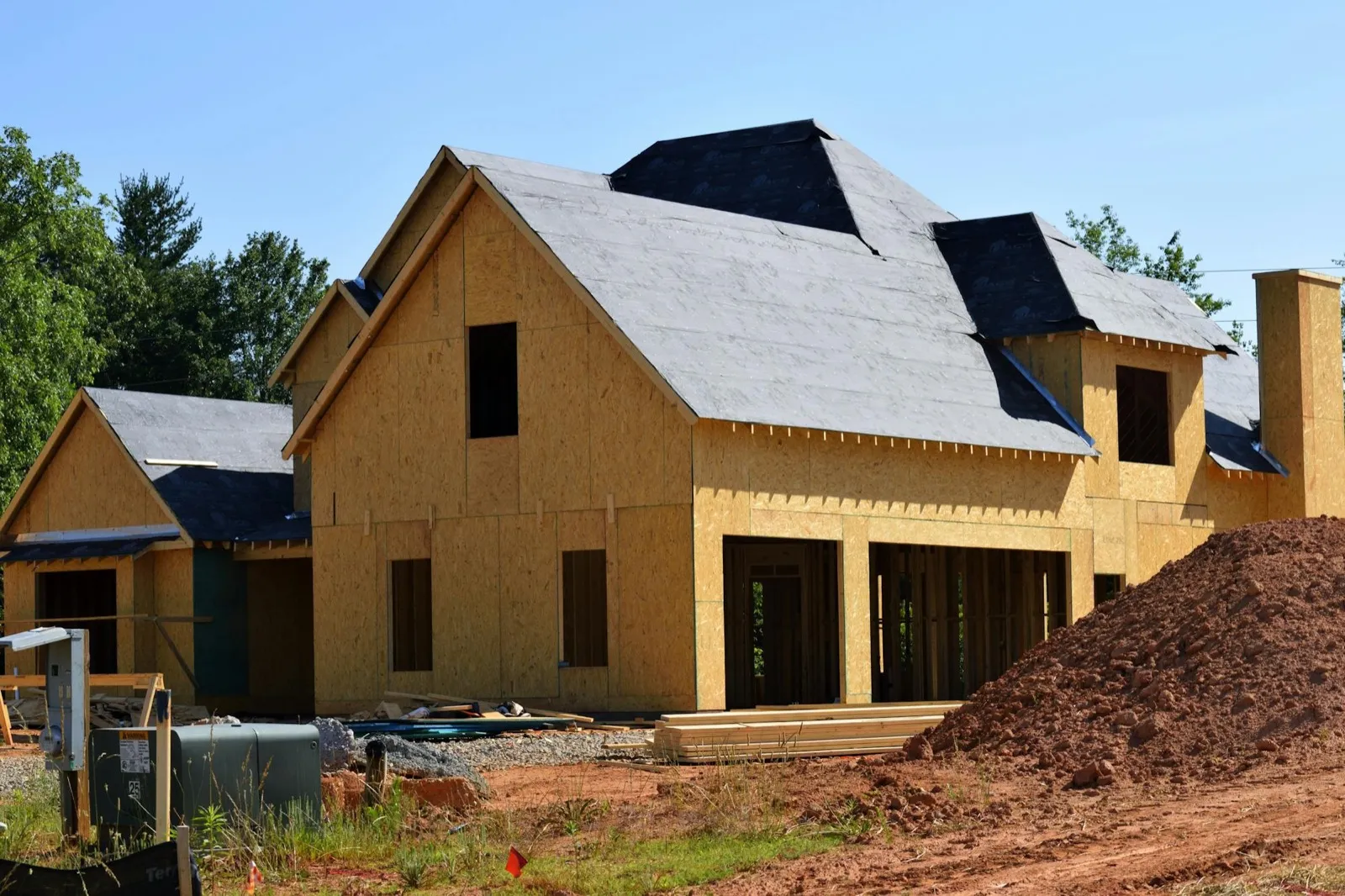
On new construction every wall, roof bay and rim is open. That makes it the easiest moment foam will ever have, since nothing needs to come out to reach a cavity.
Acreage additions
The acreage properties on Adel’s edges see new builds and additions. When an addition goes up, its walls and ceiling can be sprayed before they close, and the joint where new framing meets the old house gets sealed while it is still within reach.
Working with a builder
If a builder is handling your project, or you are doing the addition yourself, call while the framing is still bare. We can talk through which walls and ceilings make sense for foam before the drywall crew is booked.
When we will tell you to leave foam out.
Closed-up walls
Foam needs an open cavity to expand into. If a wall already has drywall on it, spraying means cutting it open, and in most older Adel homes that mess is not worth it. There are other ways to add insulation to a finished wall, and we will explain them when we are standing in the room.
Soft or stained wood is the other stopper. If a rim joist feels spongy or a basement wall shows water marks, the foam waits while that gets fixed by whoever the right trade is. Sometimes that trade is not us, and we will say so.
The walkthrough makes the call
We do not arrive planning to foam the whole house. Some homes need the rim joist sprayed and nothing more. Some need a bonus room floor and a pair of knee walls. A few are better off with blown-in insulation throughout, after the ceiling is sealed the way our attic insulation page describes.
So every Adel job starts with us in the basement and up in the attic, looking at what is really there before anything is written. Call (515) 204-3138 and we will set a time to come see it.
Spray foam questions from Adel.
Is spray foam worth it in an older Adel home?
What is the difference between spray foam and blown-in?
Can you spray foam into an addition we are building now?
Will spray foam fix the cold bonus room over our garage?
Do you ever talk people out of spray foam?
Does Adel fall inside your regular service area?
Let us find the drafts first.
Call (515) 204-3138 and Christian will go through the basement, the attic and any added-on rooms, then put down in writing where foam belongs and where something else fits better. You can also see finished work, or request the quote to set a time.